概述
- 词法解析器:
pars0lex.l - 语法解析器:
pars0grm.y
执行流程:
fts_index_fetch_nodes
  ├─ pars_info_create / pars_info_bind_id("table_name")   ← 绑定 $table_name
  ├─ pars_info_bind_function("my_func", fetch->read_record, fetch)
  ├─ pars_info_bind_varchar_literal("word", ...)          ← 绑定 :word
  ├─ *graph = fts_parse_sql(...)     → pars_sql → yyparse → que_fork_t
  └─ for(;;) fts_eval_sql(trx, *graph)
        ├─ graph->trx = trx
        ├─ graph->fork_type = QUE_FORK_MYSQL_INTERFACE
        ├─ que_fork_start_command(graph) → que_thr_t
        └─ que_run_threads(thr)          ← 真正执行图
查询倒排表的 SQL:
PROCEDURE P() IS
  DECLARE FUNCTION my_func;
  DECLARE CURSOR c IS
    SELECT word, doc_count, first_doc_id, last_doc_id, ilist
    FROM $table_name
    WHERE word LIKE :word
    ORDER BY first_doc_id;
  BEGIN
    OPEN c;
    WHILE 1 = 1 LOOP
      FETCH c INTO my_func();
      IF c % NOTFOUND THEN
        EXIT;
      END IF;
    END LOOP;
    CLOSE c;
  END;
END;
调用 fts_parse_sql 对上述 SQL 进行解析,生成可执行的 Query Graph,再调用 fts_eval_sql 执行该 Query Graph。
生成 Query Graph
解析函数定义
处理 my_func 时,匹配 PARS_ID_TOKEN,执行动作 sym_tab_add_id,申请名为 my_func 的 sym_node_t 节点,保存到全局变量 pars_sym_tab_global 的 sym_list 链表中。
DECLARE FUNCTION my_func; 匹配 function_declaration 规则,执行动作 pars_function_declaration,检查 my_func 是否已经注册,并返回词法分析器中申请的 my_func 对象。
my_func 在之前的代码中已通过 pars_info_bind_function 注册到 pars_info_t 中。随后,pars_info_t 被保存到全局符号表的 pars_sym_tab_global->info 中,供 pars_function_declaration 校验。
解析 cursor
cursor 由名称和一条简单的 select_statement 组成,SELECT 部分也被称作 cursor definition。
- cursor 的名称
c与my_func类似,匹配PARS_ID_TOKEN,经sym_tab_add_id处理后返回sym_node_t。 select_statement经pars_select_statement函数解析后返回sel_node_t。
pars_cursor_declaration 接收并处理 sym_node_t 和 sel_node_t,将 sym_node_t 的 token_type 设置为 SYM_CURSOR,并将两者关联起来。
解析 procedure body
procedure body 位于 BEGIN 和 END 之间,由一系列 statement 构成(statement_list),包括控制语句、赋值语句和 SQL 语句等。不同的 statement 对应不同的 pars_*_statement 函数。
各个 statement 匹配后,都会通过 que_node_list_add_last 函数串联到 que_common_t 的 brother 链表上(que_common_t 是所有 statement 共有的部分,所有 statement 数据结构都包含 que_common_t)。
statement_list 最终返回链表的头节点。
解析 open c
匹配 open_cursor_statement 规则,执行 pars_open_statement 动作,返回 open_node_t 对象,其 type 为 ROW_SEL_OPEN_CURSOR。
pars_open_statement 中调用 pars_resolve_exp_variables_and_types 对 c 进行解析,从 pars_sym_tab_global->sym_list 中找到 cursor definition。cursor definition 会被保存到新申请的 open_node_t 节点上,并返回给上层。
解析 while
匹配 while_statement,执行 pars_while_statement 动作,返回 while_node_t 对象。
while 由循环条件和循环体组成,循环体也是一系列 statement。
pars_while_statement 会将 while 循环体中所有 statement 节点的 parent 设为新申请的 while_node_t 对象。
解析 1 = 1
本例的 while condition 是 1 = 1。解析器执行 pars_op('=', $1, $3);,生成一个 func_node_t 对象,其 func 为 =,fclass 为 PARS_FUNC_CMP。
1 匹配 PARS_INT_LIT,调用 sym_tab_add_int_lit 生成 token_type 为 SYM_LIT 的 sym_node_t 对象,并将其保存到 func_node_t 的 args 成员变量中。
解析 fetch
通过 fetch 可以遍历 cursor,既支持将 cursor 当前值保存到 user variable 中,也支持交给自定义函数处理。
fetch 匹配 fetch_statement,执行 pars_fetch_statement 动作,返回 fetch_node_t 对象。
本例将 cursor 交给 my_func 处理。my_func 通过 pars_info_bind_function 注册,并被保存到 fetch_node_t->func 中。
解析 if
if 匹配 if_statement,执行 pars_if_statement 动作,返回 if_node_t 对象。
c % NOTFOUND 用于判断 cursor 是否遍历结束,属于表达式。解析过程参见解析表达式:它生成一个 func_node_t,其 func 为 PARS_NOTFOUND_TOKEN,fclass 为 PARS_FUNC_PREDEFINED;在 eval 时调用 eval_notfound 判断 cursor 是否遍历完。
exit 匹配 exit_statement,执行 pars_exit_statement 动作,返回 exit_node_t 对象。
解析 close c
匹配 close_cursor_statement 规则,执行 pars_open_statement 动作,返回 open_node_t 对象,type 是 ROW_SEL_CLOSE_CURSOR。
解析表达式
pars0grm.y 中的表达式对应规则 exp,目前支持的表达式数量较少,主要包括运算符和函数。运算符通过 pars_op 处理,函数通过 pars_func 处理,两者都返回 func_node_t 类型的对象。
解析 procedure
最终,调用 pars_procedure_definition 完成整个存储过程的解析,返回执行图 que_fork_t。
pars_procedure_definition 调用 que_fork_create 创建 fork,调用 que_thr_create 为 fork 创建一个 que_thr_t;创建一个 proc_node_t 类型实例 node,标记 node 和 thr 的父子关系。
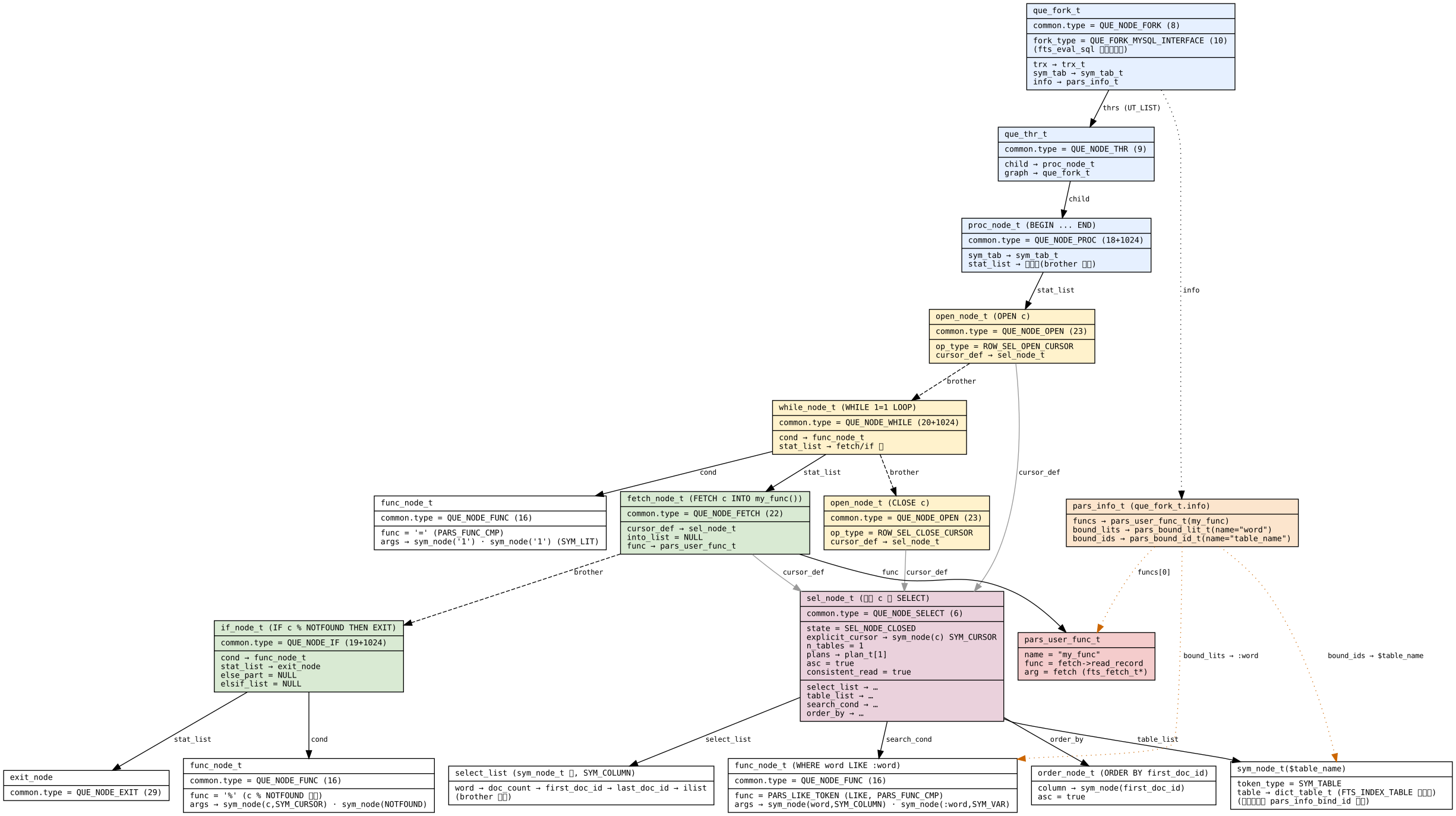
最终 Query Graph
最终生成的 Query Graph 如下图所示: